silver nitrate notes
a personal log of classic cinema
navigation
currently watching
The Passion of Joan of Arc (1928, Dreyer). second viewing this month, on the Norwegian-print restoration.
recent updates
14 apr · published Toland piece
09 apr · archive tidied
02 apr · april watch log added
27 mar · fixed broken Murnau link
14 mar · new guestbook entries
visitors
094,899
mailing list
new posts by email. one a month.
Chaplin's City Lights and the Refusal of Sound
8 dec 2011
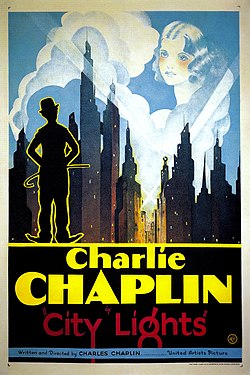 Charlie Chaplin made City Lights (1931) as a silent film four years after The Jazz Singer (1927) had made sound mandatory. The industry told him he was a fool. He told the industry he would do it anyway. He had been working on the film since 1928 and was not about to switch methods. What he made is one of the two or three greatest romantic comedies in American cinema.
The production was a disaster on almost every metric except the final cut. Chaplin spent two and a half years shooting, at a cost of over $1.5 million. He fired his leading actress Virginia Cherrill (playing the blind flower girl) after five months, replaced her with Georgia Hale from The Gold Rush, shot for another month, then rehired Cherrill because he realised Hale did not look right in the part. He reshot scenes he had already spent weeks on when he did not like them. His cinematographer Roland Totheroh put up with all of it.
The famous final shot is one of the simplest in American cinema and one of the hardest to shake off. The Tramp, out of prison after being framed for a robbery, is reunited with the flower girl who now has her sight restored. She does not recognise him at first sight; he has been beaten down by his time in prison. She touches his hand, and the touch tells her. Chaplin holds on his face in close-up for a long beat. The smile is something between embarrassment and hope. He holds; she holds; the film ends.
James Agee, reviewing the film's re-release in 1949, called this the greatest single piece of acting ever preserved on film. The claim is defensible. What Chaplin does in that shot, working in a medium that was ending as he made it, is hold a face in a register of expectation that the viewer has no choice but to register in their own face. The silent cinema Chaplin was refusing to abandon had, in this shot, one last argument about what it could do that the talkies could not.
| film | City Lights (1931) |
|---|---|
| director | Charles Chaplin (1889-1977) |
| cinematography | Roland Totheroh, Gordon Pollock |
| star | Charles Chaplin, Virginia Cherrill |
| studio | Charles Chaplin Productions / United Artists |
| runtime | 87 min (synchronised score, no dialogue) |
| format | 35mm, 1.37:1 |
Chaplin would make one more silent film, Modern Times (1936), before finally admitting that sound was here to stay. He used sound in The Great Dictator (1940) the way a man uses a second language: fluently, but not natively. City Lights is his mother tongue.
[ « prev: The Last Laugh · next: Frankenstein » ]
» leave a comment in the guestbook
sources
[1] Chaplin, Charles. My Autobiography. Simon & Schuster, 1964.
[2] Robinson, David. Chaplin: His Life and Art. McGraw-Hill, 1985.
[3] Agee, James. Agee on Film: Criticism and Comment on the Movies. Beacon, 1958.
[4] Maland, Charles J. City Lights. BFI Film Classics, 2007.